How Pit Stops Work
An F1 pit stop is a planned stop outside the team's garage in which a crew changes all four tyres, often in under two seconds, before releasing the car safely back into the pit lane.
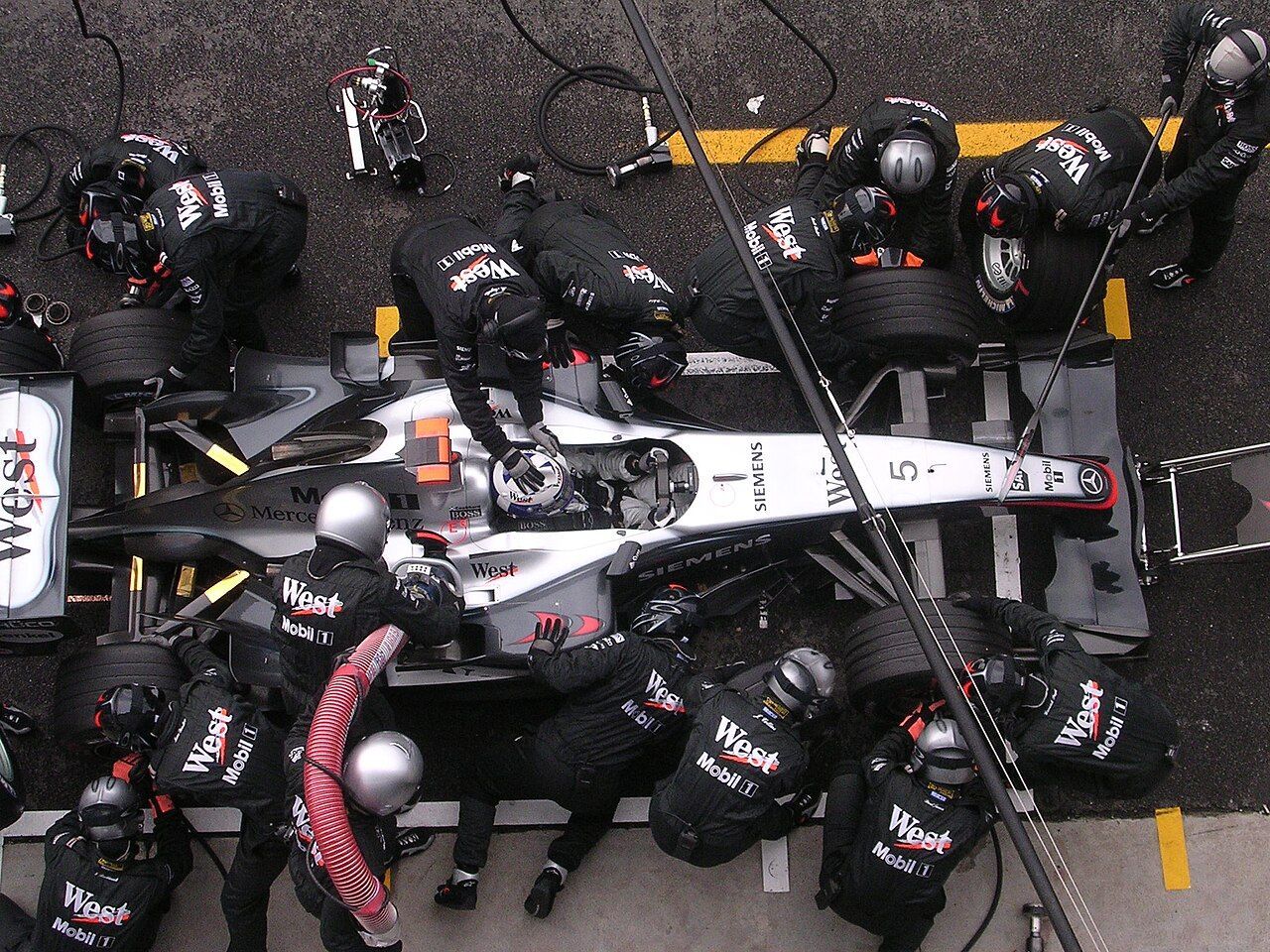
An F1 pit stop is a planned stop outside the team's garage in which a crew changes all four tyres, often in under two seconds, before releasing the car safely back into the pit lane. The speed makes the headlines, but the stop only counts if the car is serviced, released and driven out within strict rules.
The crew and the choreography
Formula 1 describes a pit stop simply: the driver stops in the pit box outside the team's garage during a race to have the tyres changed or repairs carried out, and the crew works as fast as it can. What looks like chaos is a rehearsed routine. Each wheel has its own small team, with a wheel gunner using an air gun to undo and tighten the single wheel nut, one mechanic pulling the old tyre off and another fitting the new one. Jack operators lift the front and rear of the car as it arrives, while other crew members steady it and stand ready for adjustments such as a front wing change.
According to formula1.com's own breakdown of a stop, the guns come off and the crew press confirmation buttons around 1.9 seconds in. Those buttons signal that each wheel is secure, and only then is the car released. Refuelling plays no part: it is banned during the race, so a modern stop is about tyres and small repairs, not fuel.
The rules of the pit lane
The pit lane has its own rules, and breaking them can cost more than any slow wheel change. A speed limit applies in the pit lane throughout the event, commonly 80 km/h, and it can differ at some circuits, so check the event notes or the current FIA regulations. A car may only leave the pit lane when the light at its exit is green.
The most serious error a team can make is an unsafe release. FIA rules say a car must not be released from its garage or pit stop position in an unsafe condition, or in a way that could endanger pit lane personnel or another driver. That covers releasing a car into the path of another one, or sending it out with a wheel not properly fitted. The stewards can penalise it, and penalties are set out in the regulations, which change from time to time, so check the current FIA sporting rules for the detail.
Strategy: when to stop
Formula 1's glossary describes at least one pit stop as mandatory in a Grand Prix, though not in a Sprint, a consequence of the tyre rules. The real question is when to stop. With the undercut, a driver pits before a rival and uses the grip of fresh tyres to set faster laps, hoping to be ahead when the rival makes their own stop. The overcut is the opposite: the driver stays out longer, relying on clear track or tyres that still work well, and gains time while the rival is in the pits or warming up new tyres. Which works best depends on the circuit, tyre wear and traffic.
A stop can be won or lost in the lane itself. A slow wheel, a jack that drops too early, a car held for passing traffic or a speeding penalty can undo a perfect strategy call. When watching, judge a pit stop by the whole picture: a fast change is only worth something if the car is released legally and safely, and rejoins the track in the right place.