F1 Tyres Explained
F1 tyre colours do not name a fixed rubber: red, yellow and white simply mark the softest, middle and hardest of the three dry compounds chosen for that weekend.
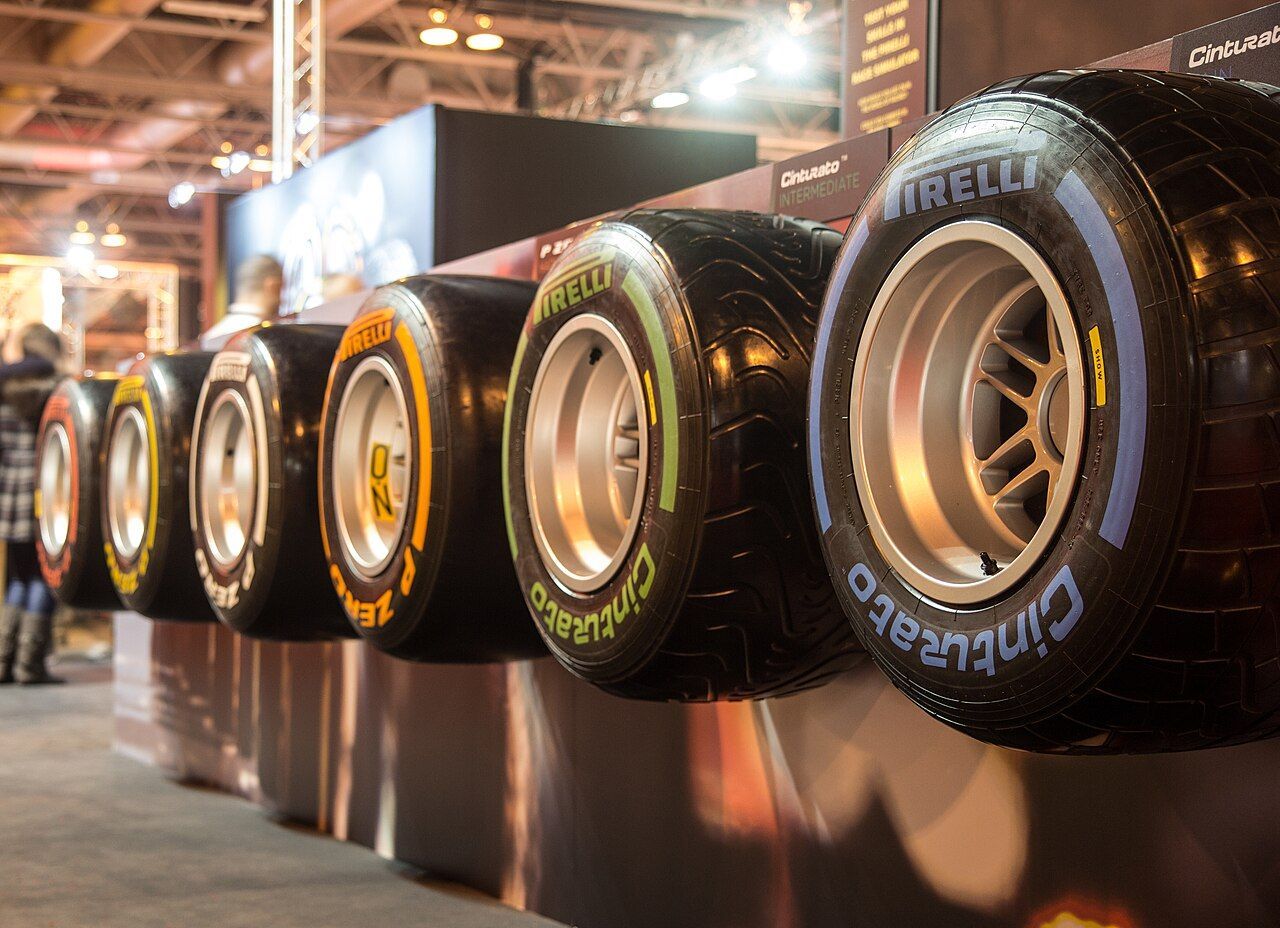
F1 tyre colours do not name a fixed rubber: red, yellow and white simply mark the softest, middle and hardest of the three dry compounds chosen for that weekend. Add green intermediates and blue full wets for rain, and you have every tyre a commentator is likely to mention.
Compounds and colours
Pirelli, the tyre supplier, builds a numbered range of slick compounds, from C1 upwards. The lower the number, the harder the compound; the higher the number, the softer it is. The size of the range has changed over the years, so check Pirelli's own Formula 1 pages for the current line-up. For each event, three of these dry compounds are nominated and relabelled for that weekend only:
- Soft, red sidewall: the highest-numbered slick of the three and the weekend's fastest option
- Medium, yellow sidewall: the middle choice
- Hard, white sidewall: the lowest-numbered slick of the three, built to last the longest
- Intermediate, green sidewall: for a damp or drying track
- Full wet, blue sidewall: for heavy rain and standing water
This is why a "soft" at one circuit can be a different compound from a "soft" at the next. The colours tell the viewer which of the weekend's three options a car is on, not which C-number it is. The FIA's sporting regulations require the dry tyres to be visibly distinguishable from one another when a car is on track, which is the job the coloured sidewalls do.
Grip, wear and tyre management
Softer rubber gives more grip, so a car goes faster on it, but it wears and loses performance sooner. Harder rubber is slower over a single lap but lasts longer. Every race strategy is built around that trade-off: a team weighs how much time a fresh, softer tyre gains against how many more stops it might force.
Two words come up constantly in commentary. Degradation is the gradual loss of grip, and therefore lap time, as a tyre wears and its rubber is worked hard lap after lap. Graining happens when a tyre slides across the surface: small strips of rubber tear off and stick back onto the tread, leaving a rough layer that reduces grip until it wears away. When drivers talk about managing their tyres, they mean driving in a way that keeps wear, temperature and graining under control, so the tyre still works at the end of a stint.
What the rules say
The sporting regulations require the supplier to provide dry, intermediate and wet specifications at each event. As a general rule, a driver in a dry race must use more than one of the nominated dry compounds, which is why most Grands Prix include at least one pit stop even when the tyres could last longer. That requirement is relaxed when wet-weather tyres come into play. Tyre allocations and the exact wording of these rules are revised from time to time, so treat the principle as a guide and check the current FIA Formula One Sporting Regulations for the precise detail.
When watching a race, look at the sidewall colour first: it tells you whether a car is on the fastest, middle or most durable tyre of that weekend. Then listen for talk of degradation and pit windows, because the gap between a soft and a hard tyre is where most race strategy is decided. For the compounds nominated at any given event, Pirelli and Formula 1 publish them before the weekend.