F1 Flags Explained
Every F1 flag tells a driver one of five things: race on, slow down, stop, give way or come into the pits.
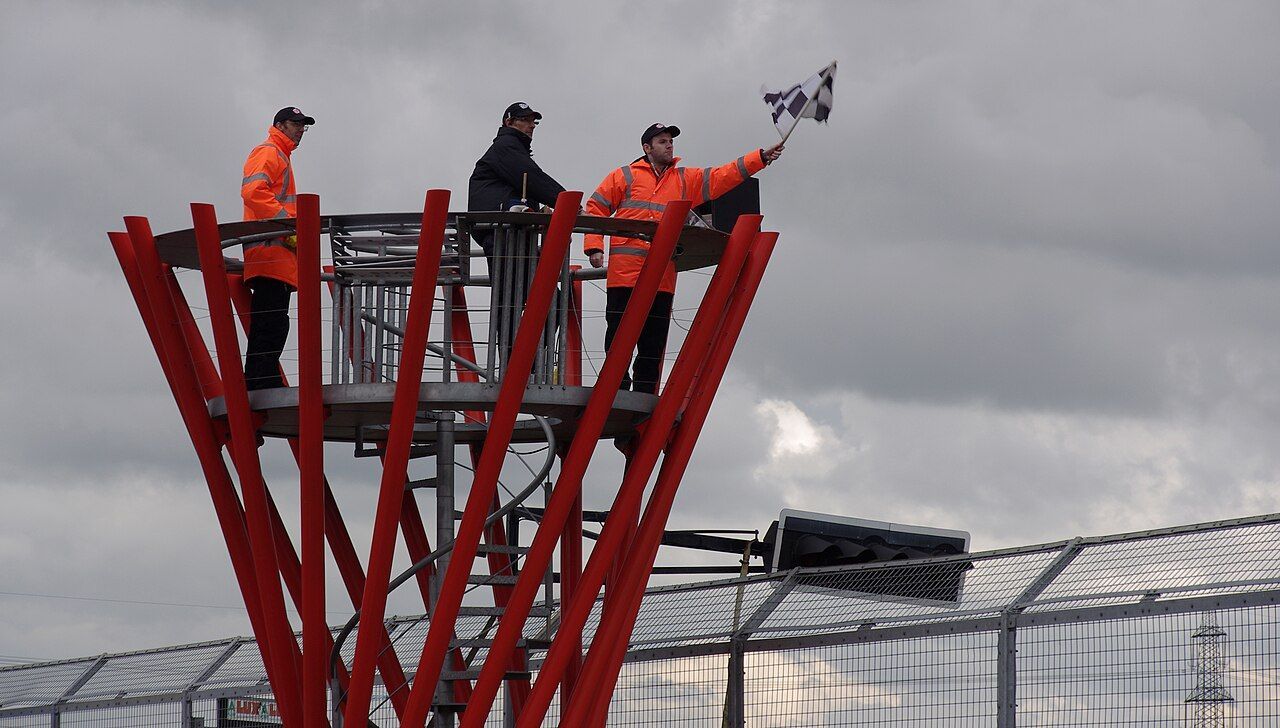
Every F1 flag tells a driver one of five things: race on, slow down, stop, give way or come into the pits. Marshals show the flags from posts around the circuit, and the same messages are repeated on trackside light panels and on the car's dashboard, so a driver still gets the warning if a flag is missed at speed.
Flags for the whole field
Most flags seen on television describe the state of the track. Green means the track is clear and drivers can carry on racing. A single waved yellow warns of a hazard ahead, such as a stopped car or debris: drivers must reduce speed and be prepared to change direction. A double waved yellow is stricter. Drivers must slow significantly and be ready to change direction or stop, because the danger may be marshals or a car on the racing line. Red means the session or race has been stopped.
A few more flags complete the set. The red and yellow striped flag warns of a slippery surface, such as oil or water on the track. The white flag tells a driver there is a much slower vehicle ahead. The blue flag is often misread as a telling-off, but it is simply a lapping instruction: a faster car is coming up to lap the driver, who must let it pass. The chequered flag marks the end of a practice, qualifying or racing session.
Flags for a single driver
Three flags are aimed at one driver rather than the whole field. The black and white diagonal flag is a warning for unsporting behaviour or a breach of the rules; think of it as a formal caution before anything more serious. The black flag means the driver has been disqualified. The black flag with an orange disc is not a punishment at all. It means the car has damage or a mechanical problem, and the driver must return to the pit lane immediately so the fault can be dealt with before it becomes a danger to anyone else.
Light panels, dashboards and a quick reference
A flag waved from a marshal's post can be hidden by a crest, a wall or another car, and at racing speed a driver has only a moment to see it. That is why Formula 1 repeats the signals on light boards beside the track and on a display inside the cockpit. The panel and the dashboard do not replace the marshals; they back them up, so the message reaches the driver whichever way they are looking. The formal requirements, including how much a driver must slow under yellow flags, are set out in the FIA's Formula One Sporting Regulations, and the wording can be revised, so check the current FIA rules for the exact detail.
| Flag | What it tells the driver |
|---|---|
| Green | Track clear, race on |
| Single waved yellow | Hazard ahead: slow down, be ready to change direction |
| Double waved yellow | Serious hazard: slow significantly, be ready to stop |
| Red | Session or race stopped |
| Blue | A faster car is about to lap you: let it pass |
| White | Much slower vehicle ahead |
| Red and yellow stripes | Slippery surface, such as oil or water |
| Black and white diagonal | Warning for unsporting behaviour or a rule breach |
| Black | Disqualified |
| Black with orange disc | Car damaged or faulty: pit immediately |
| Chequered | End of the session |
For a new fan, the simplest way to read any flag is to ask what it wants from the driver: keep racing, slow, stop or pit. Most flags are about safety and race control rather than punishment, and whatever else has happened, the chequered flag is always the last signal of the session.