Silverstone Circuit History
Silverstone began as RAF Silverstone, a Second World War bomber airfield, and became a racing venue in 1948.
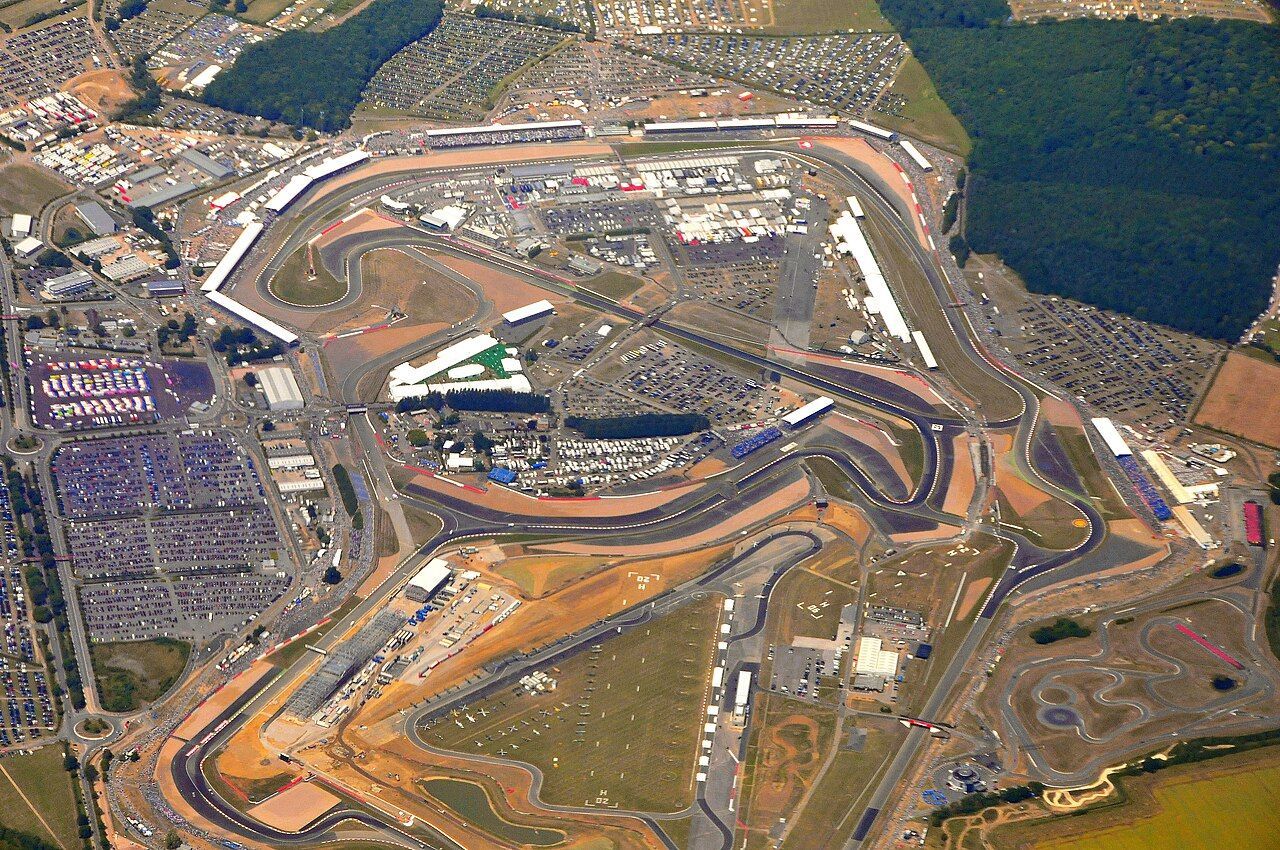
Silverstone began as RAF Silverstone, a Second World War bomber airfield, and became a racing venue in 1948. Two years later it staged the first round of the new Formula 1 World Championship, and the outline of the old airfield still shapes the circuit today.
From bomber station to Grand Prix venue
RAF Silverstone was a Royal Air Force bomber station, operational during the Second World War, on the land now occupied by the circuit. After the war the airfield offered what motor racing in Britain lacked: a large, flat, enclosed site with long stretches of hard surface already in place.
In 1948 the airfield was converted into a motor racing circuit, and on 2 October that year the Royal Automobile Club held the first British Grand Prix at Silverstone. The earliest layout used both the runways and the perimeter roads. Cars raced along the runways themselves, with long straights and tight hairpin corners marked out by hay bales.
The layout changed almost at once. For the 1949 International Trophy meeting, racing switched to the perimeter track, and Historic England records that use of the runways was abandoned in 1950. The perimeter road became the basis of the circuit that followed.
The first World Championship race
On 13 May 1950, Silverstone hosted the British Grand Prix that marked the official start of the Formula 1 World Drivers' Championship. It is best described as the first World Championship Grand Prix rather than the first Formula 1 race, since Grand Prix racing and non-championship events already existed. King George VI attended the meeting, which gave the new championship a royal send-off and put Silverstone firmly on the international map.
BRDC ownership and a changing layout
Stewardship of the circuit then moved from the RAC to the British Racing Drivers' Club. The BRDC took over the lease of Silverstone from the RAC in 1952, and in 1971 it announced that it had acquired the freehold of the site from the Ministry of Defence. From then on, the club controlled the land as well as the racing.
Over the following decades the track was reworked many times, with corners reshaped, new sections added and facilities rebuilt as cars became faster and safety standards rose. The exact sequence of those changes is best followed through the circuit's own published history, because the layout has rarely stayed the same for long.
What has not changed is the underlying geometry. The modern circuit still reflects the former airfield's three-runway triangular pattern, decades after the runways stopped being used for racing. A driver on the current track is, in effect, still racing around a wartime airfield.
Silverstone is now the long-established home of the British Grand Prix and hosts a wide range of other racing, track days and driving events. For anyone visiting, the airfield story is the key to reading the place: look at an aerial view before arriving and the wartime triangle is easy to spot, and check the circuit's official website for current events and visitor information.
Sources
- Silverstone, Our History: Our history
- Silverstone, History of the circuit: History of the circuit
- RacingCircuits.info, Silverstone: Silverstone
- Fondazione Pirelli, 13 May 1950: Formula 1 Comes to Life at Silverstone: 13 may 1950 formula 1 comes to life at silverstone
- BRDC, History: History
- Historic England Research Records: Results Single