Car Hand Controls
Hand controls for cars let a driver accelerate and brake by hand instead of with the pedals, so people who cannot use their legs can still drive.
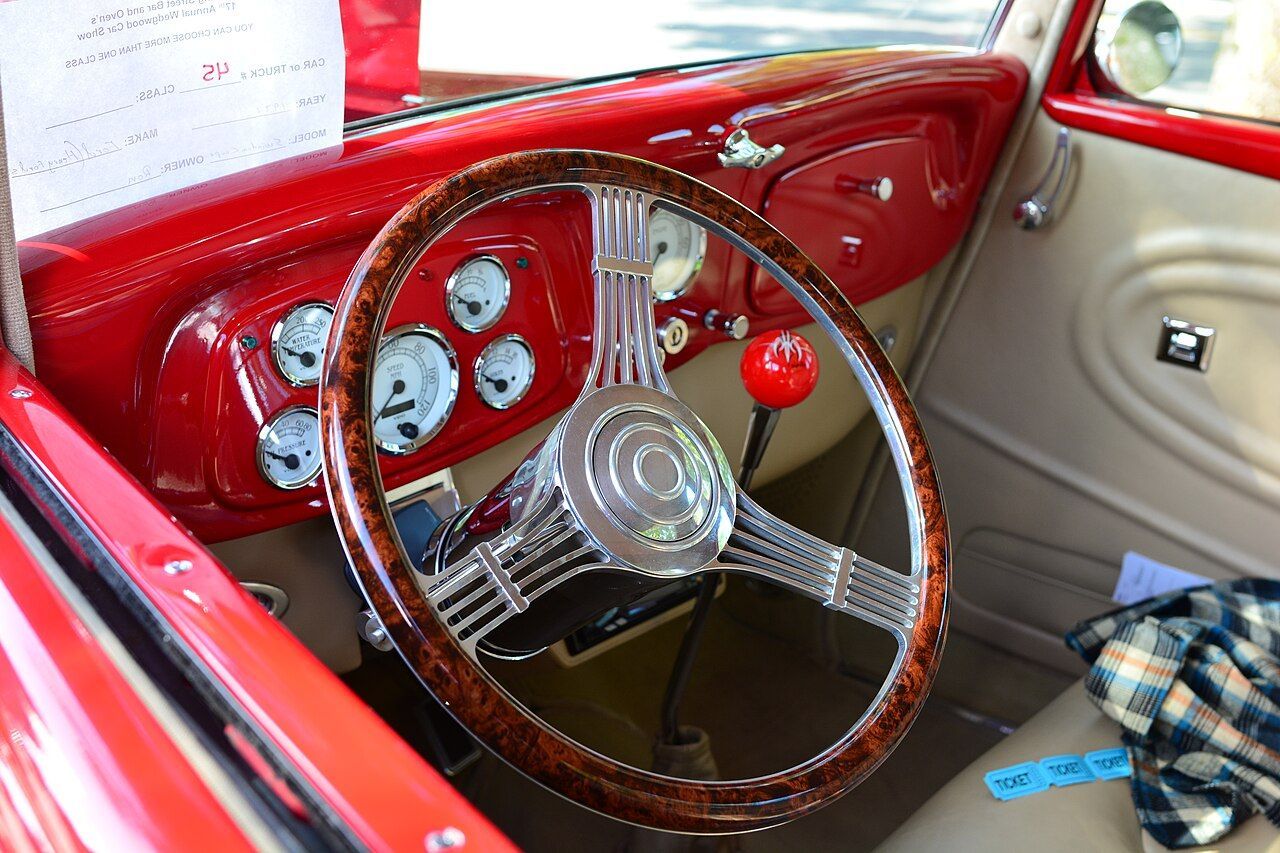
Hand controls for cars let a driver accelerate and brake by hand instead of with the pedals, so people who cannot use their legs can still drive. The right set-up depends on the person, which is why the usual starting point is a driving assessment at a specialist centre.
How hand controls and other adaptations work
Hand controls operate the accelerator and brake. A guide from Ricability and Driving Mobility explains that anyone who cannot use their legs, or who does not want to use a left-foot accelerator, can use hand controls to accelerate and brake. They are usually a lever fitted beside the steering wheel. Two common designs are push-pull, where the driver pushes the lever to brake and pulls it to accelerate, and push-rotate, where pushing brakes and twisting the grip accelerates. The steering wheel is then turned with the other hand, often with the help of a steering ball or knob, which lets the driver turn the wheel more easily and with greater control.
Hand controls are only one option. The Driver and Vehicle Standards Agency's Safe Driving for Life guidance also lists:
- left-foot accelerator conversions, for drivers who cannot use the right foot
- clutch conversions, and steering and secondary control aids
- parking brake devices, extra mirrors, harnesses and special seating
- wheelchair stowage equipment
Hand controls are normally fitted to cars with automatic gearboxes, because there is no hand free to work a clutch and gear lever at the same time. An assessment will confirm what suits a particular driver.
Getting a driving assessment
Safe Driving for Life describes a driving assessment as a useful starting point for anyone with a disability. Driving Mobility coordinates a UK network of accredited driving assessment centres. At DriveAbility Scotland, for instance, an assessment includes a consultation, any screening that is needed and a practical drive in an adapted or dual-controlled car. Assessors then recommend the controls and adaptations that suit the driver. Trying different controls in a centre's car before paying for any conversion avoids costly mistakes.
Costs, help with paying and the legal side
Costs vary between centres, and Driving Mobility advises contacting the nearest Mobility Centre for current prices. Some assessments are paid for by the body that makes the referral. DriveAbility Scotland says assessments referred by the DVLA are paid for in full by the DVLA, and those referred through the Motability Scheme are paid for by Motability. Self-referrals are charged. Motability can also help finance vehicle modifications for drivers who receive certain disability allowances, and it publishes its adaptation prices. Eligibility rules and prices change, so check the Motability Scheme's own information before relying on it.
There is also paperwork. Drivers must tell the DVLA if they have a disability that affects their driving, or if a disability has got worse since they got their licence; the list of conditions and how to report them are on gov.uk. It is also sensible to tell the insurer before driving an adapted car, as undisclosed changes can affect cover.
The practical route is straightforward: book an assessment at an accredited centre, let the assessor recommend the controls, then check the current DVLA, insurer and Motability requirements before anything is fitted. For advice on a specific condition, speak to a doctor and check gov.uk.
Sources
- Driving Mobility FAQ: Faqs 2
- Safe Driving For Life, “Driving a car with a disability”: Driving car with disability
- nidirect, “Adapting your vehicle if you have a disability”: Adapting your vehicle if you have disability
- Ricability guide hosted on RSA site: 23 ricability mobility car controls
- DriveAbility Scotland, “Getting Started”: Getting started
- DriveAbility Scotland, “FAQs”: Faqs
- Motability Scheme, “Our adaptation prices”: Adaptation prices